ROOM
A Physics-Based Continuum Robot Simulator for Photorealistic Medical Datasets Generation
2026 IEEE International Conference on Robotics and Automation (ICRA)




A Physics-Based Continuum Robot Simulator for Photorealistic Medical Datasets Generation
2026 IEEE International Conference on Robotics and Automation (ICRA)
Six automated stages transform a patient chest CT into photorealistic endoscopy data.
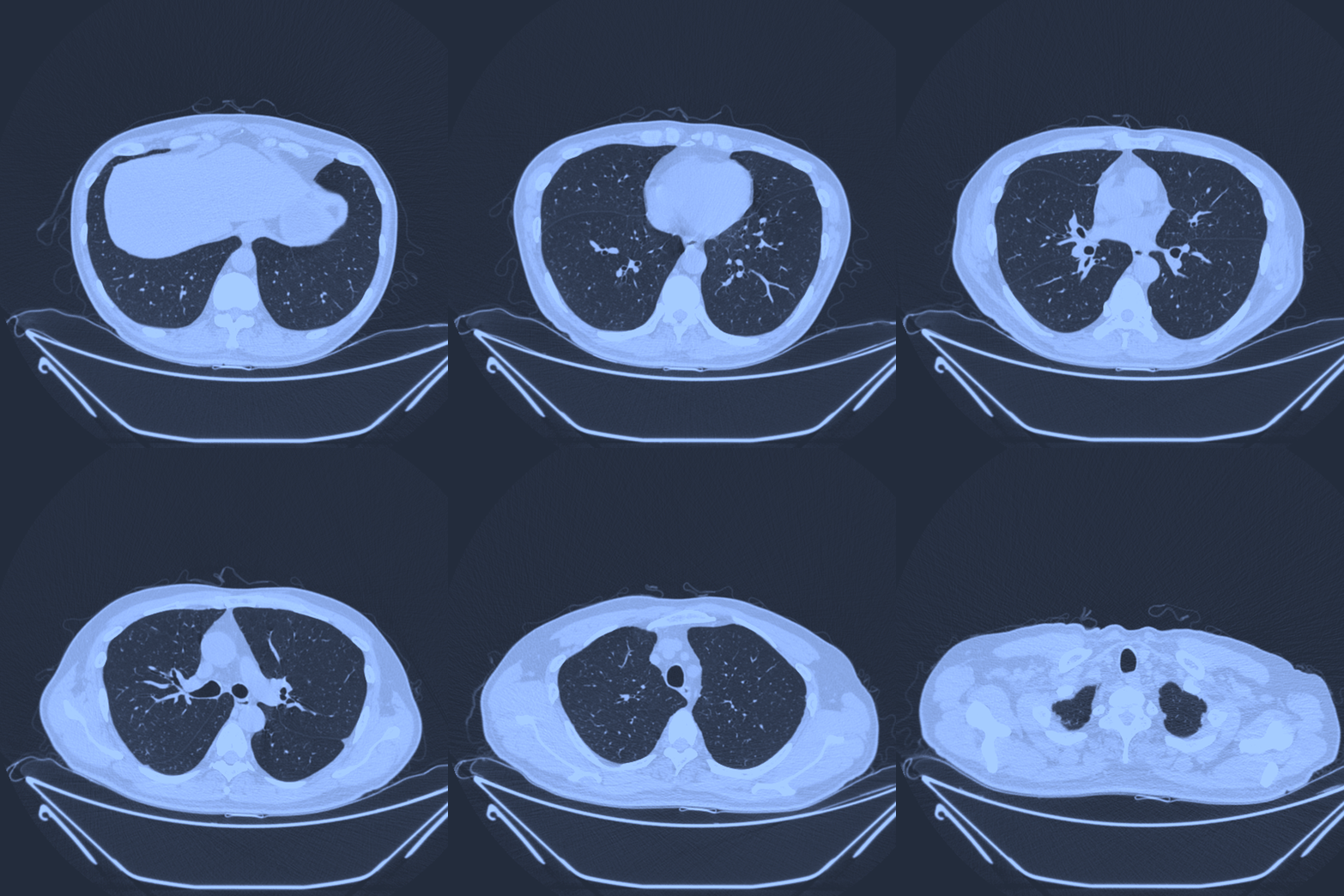
High-resolution chest CT with sub-millimeter slices. DICOM series are automatically extracted, filtered, and converted to NIfTI volumes.
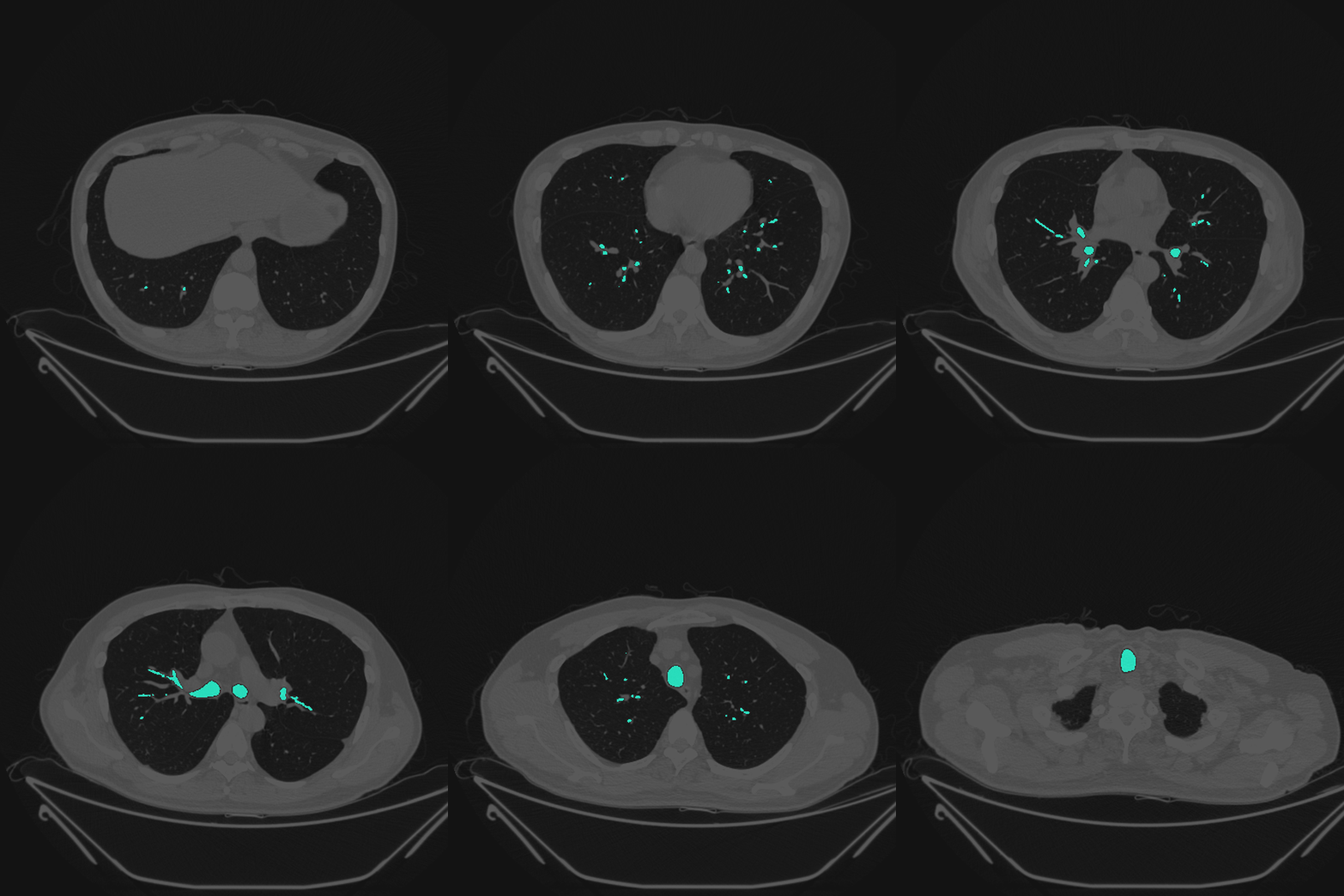
The segmentation pipeline isolates the bronchial tree from the CT volume. Quality scoring validates anatomical coverage, airway volume, and craniocaudal extent.
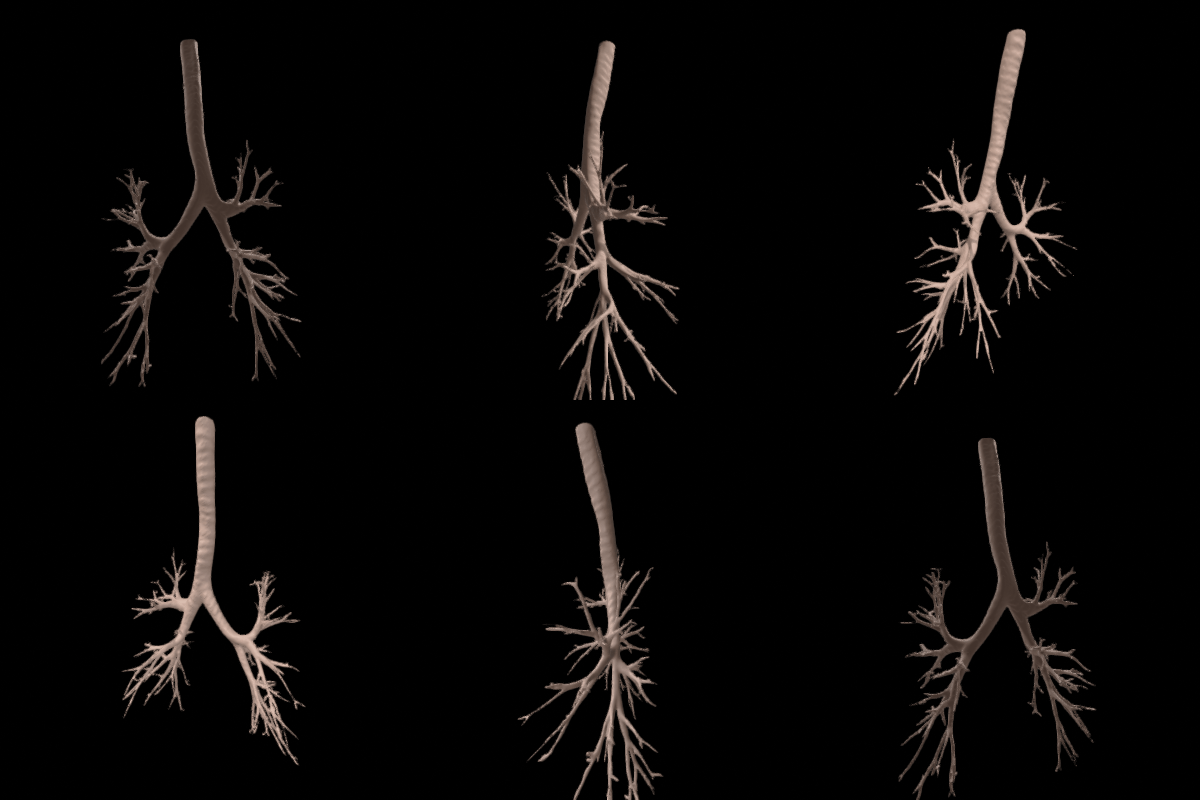
Marching cubes surface extraction, Taubin smoothing, and decimation. Normals flipped inward for endoscopic camera rendering.
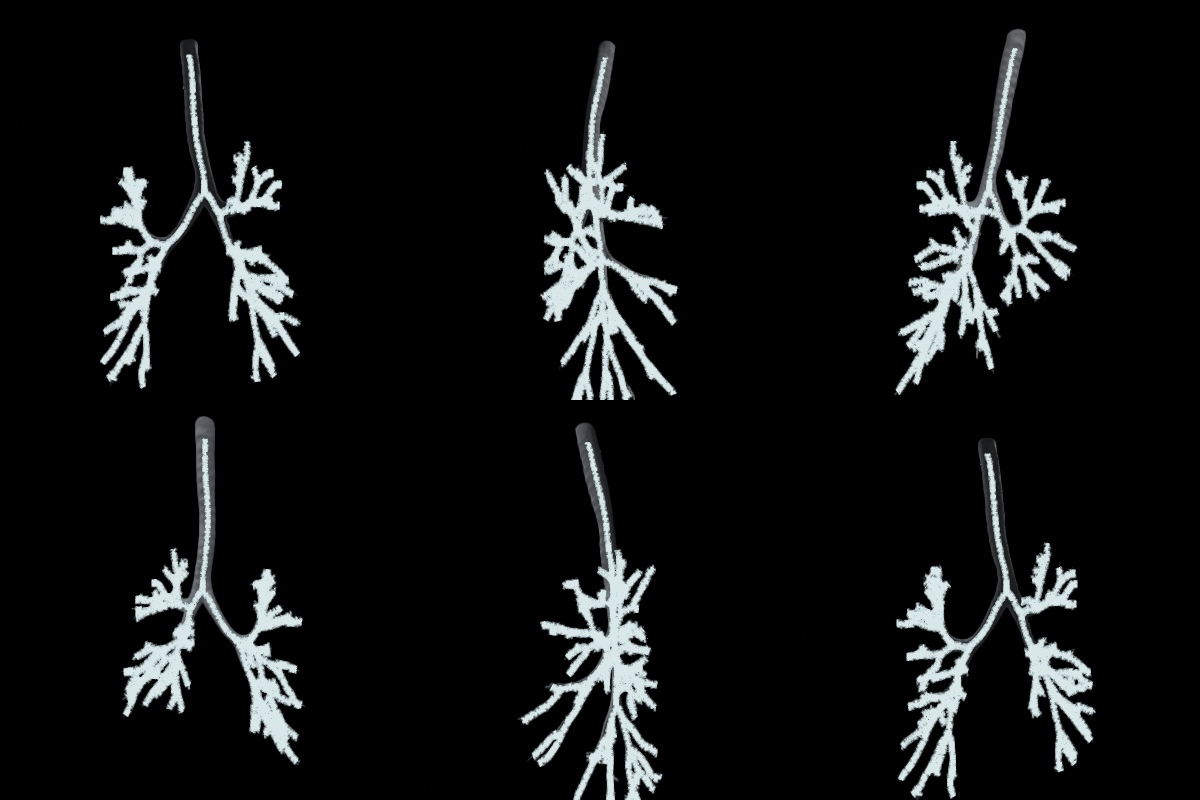
Centerline graph extraction maps branch points, endpoints, and traversal paths for camera trajectory generation.
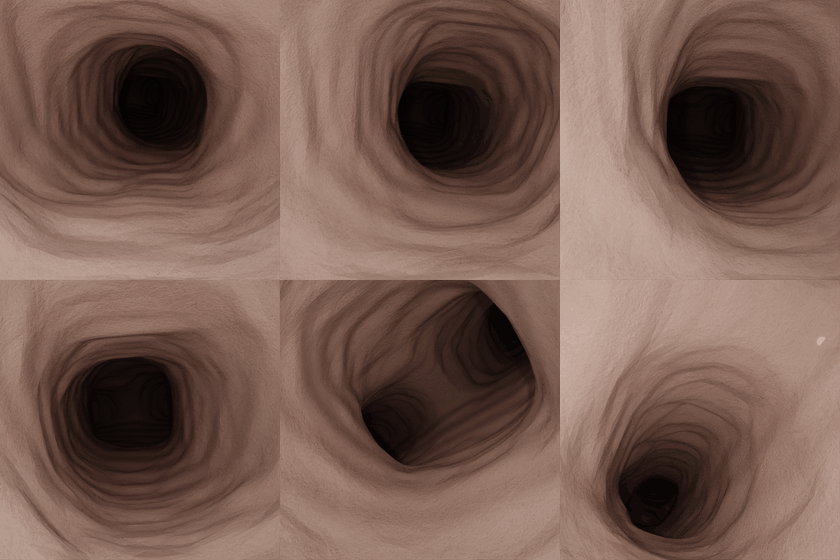
Blender Cycles path tracing with dual-LED endoscope lighting, volumetric fog, wet tissue materials, and domain randomization.
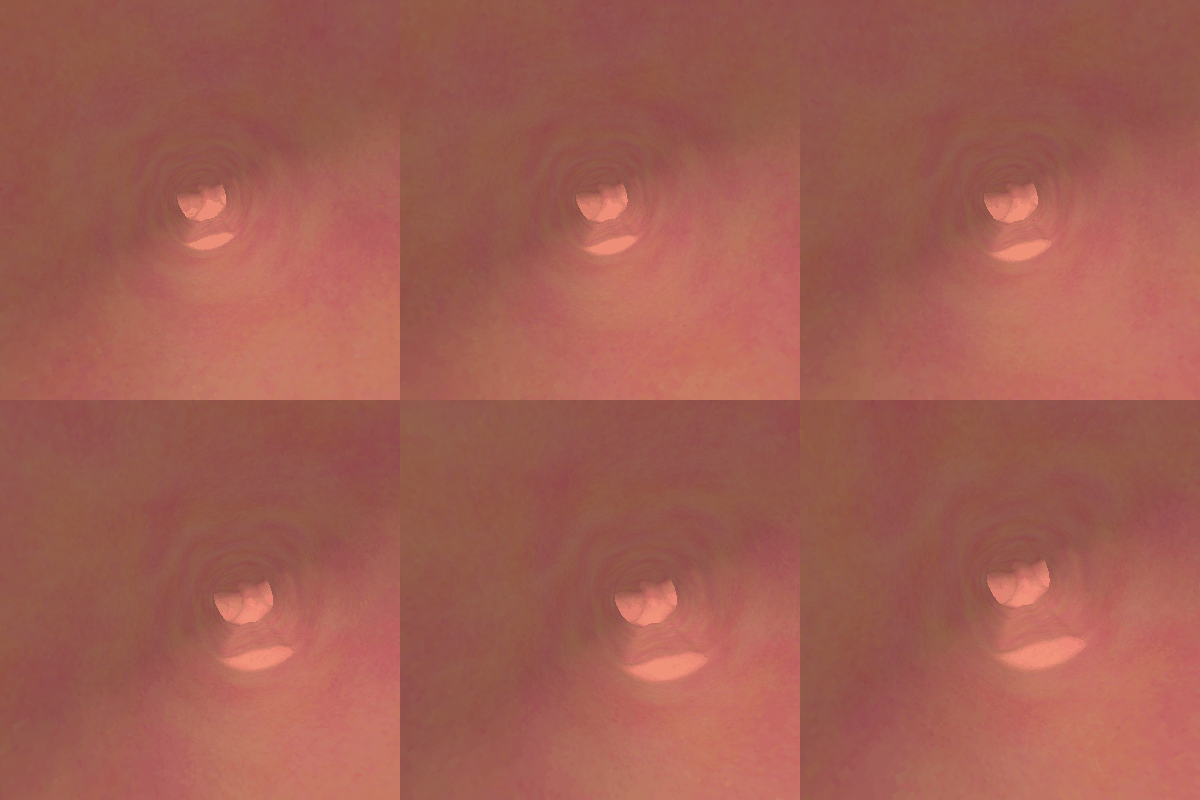
PyBullet physics with automatic trachea detection, collision response, and camera poses that transfer directly to Blender.
Continuum robot simulation with collision physics, PS5 controller, automatic trachea detection via ray-cast diameter, and MCP integration.
Cycles path tracing with dual-LED lighting, volumetric fog, wet tissue materials, and domain randomization. Multi-GPU parallel rendering.
End-to-end automation from DICOM through segmentation, meshing, skeleton extraction, and scene creation. Quality scoring at each stage.
@inproceedings{esposito2026room,
  title={{ROOM}: A Physics-Based Continuum Robot Simulator
         for Photorealistic Medical Datasets Generation},
  author={Esposito, Salvatore and Mattamala, Mat{\'\i}as
          and Rebain, Daniel and Zhang, Francis Xiatian
          and Dhaliwal, Kevin and Khadem, Mohsen
          and Ramamoorthy, Subramanian},
  booktitle={2026 IEEE International Conference on
             Robotics and Automation (ICRA)},
  year={2026}
}
Salvatore Esposito · Matias Mattamala · Daniel Rebain · Francis Xiatian Zhang · Kevin Dhaliwal · Mohsen Khadem · Subramanian Ramamoorthy
University of Edinburgh · University of British Columbia · ICRA 2026